
Prison Breakout!
Yamy StudioRole Playing
4.4341.00 Reviews
- Version
- 2.11.2
- Installs
- 1.00M
- Age Rating
- Teen
Screenshots
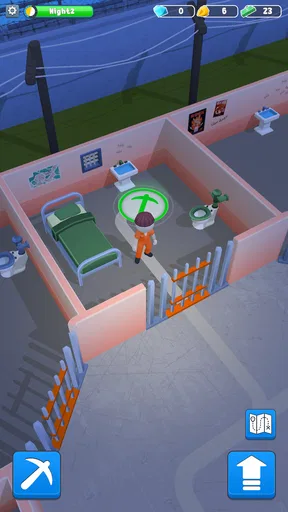
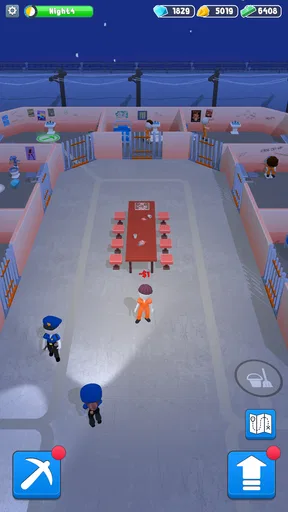
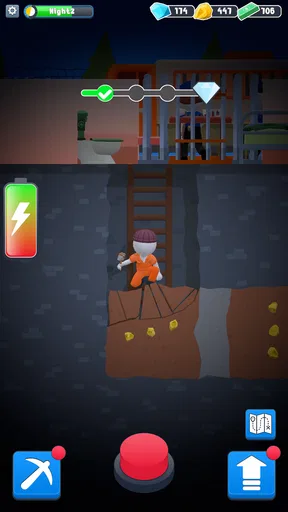
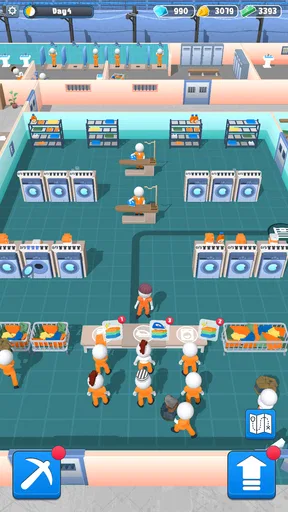
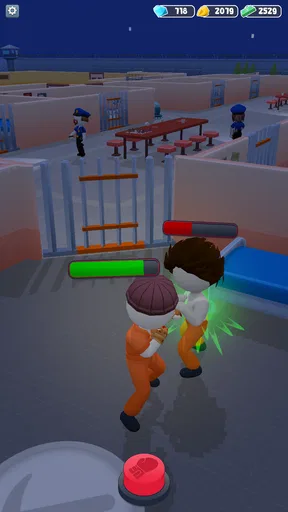
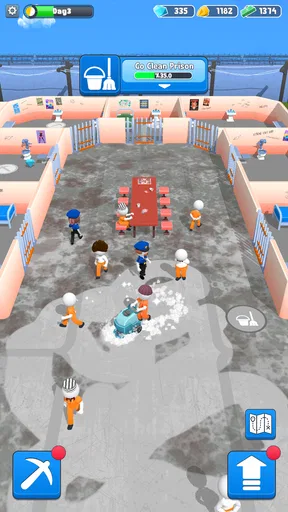
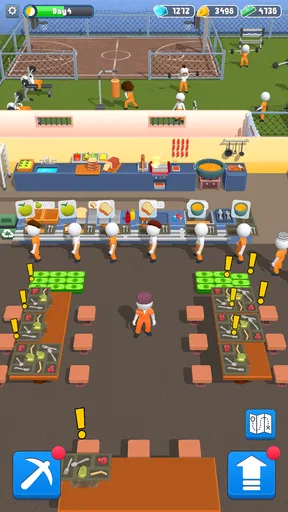
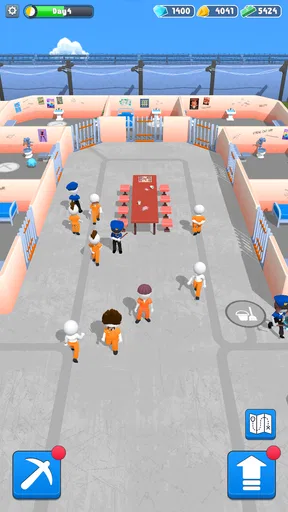
Our Review of Prison Breakout!
 Analysis by Appyee
I approached Prison Breakout! as a role-playing game built around a clear fantasy: escaping prison through thought and preparation rather than simply rushing from one room to the next. Its appeal comes from the tension between digging, planning, managing risk and choosing when to make a move. That makes it easy to understand, but not necessarily mindless. I found myself treating each attempt as a small problem to solve, with freedom depending as much on patience as on bold decisions.
Yamy Studio keeps the premise straightforward, so the game can get moving without asking you to learn an elaborate fictional universe first. The prison setting supplies the pressure, while the role-playing structure gives the escape idea more room to develop than a simple arcade game would. I think it suits players who enjoy working through a plan step by step and adjusting after a mistake.
How the prison escape experience works
The strongest part of the concept is the contrast between ordinary prison life and the secret work required to leave it. Digging is not interesting on its own; it becomes interesting because every action has to fit into a larger plan. I liked thinking about what should happen first, what could wait, and which decision might create trouble later. That rhythm gives the game a more deliberate personality than a typical action-focused escape title.
It also makes the game approachable for people who enjoy role-playing games but do not want a huge fantasy campaign. The setting is immediately understandable, and the goal stays visible. You are not wandering through a complicated world trying to remember a dozen unrelated objectives. The prison itself is the puzzle space, while the escape plan provides the long-term motivation.
That focus is useful on a phone. I can imagine opening it during a short break, making progress on one part of an escape plan, then putting it down without losing the basic thread. At the same time, the planning angle means it is not ideal for someone looking only for instant action. The satisfaction comes from making a sensible choice and seeing that choice matter, not from constant visual spectacle.
The game is free to start, which removes the biggest barrier for curious players. It carries a Teen content rating, so I would not treat it as a universal family game without checking whether its tone suits younger players. Optional purchases range from $0.99 to $39.99 per item. That spread matters when judging value: the initial download is accessible, but anyone considering spending should decide in advance how much the escape experience is worth to them.
I appreciate that the free entry point lets players test the central loop before paying anything. For a game based on repeating decisions and gradually improving a plan, that trial is more useful than a short promotional glimpse. You can discover whether the prison-break theme actually holds your attention. If it does not, there is little reason to spend money simply because the premise sounds appealing.
Planning is more important than rushing
My main practical tip is to avoid treating every opportunity as an invitation to act immediately. In a prison escape game, a tempting shortcut can be less valuable than a safer preparation step. I found the experience more enjoyable when I paused to consider the likely consequence of a move instead of chasing the fastest-looking route. That habit also makes failures feel more informative, because a failed attempt can reveal which part of the plan was too ambitious.
A second useful approach is to divide an escape into small objectives. Rather than thinking only about the final moment of freedom, I would focus on what the next safe improvement should be. This keeps the game from becoming overwhelming and helps identify where a plan is weak. It is a simple method, but it suits the prison setting particularly well: progress feels earned when several modest decisions eventually support one larger attempt.
The trade-off is that players who prefer clear, rapid rewards may find this pace slow. The game asks for attention to sequence and timing, even when the controls themselves are easy to understand. That is not a flaw for me, but it does define the audience. If you usually skip dialogue, ignore preparation and restart only to chase immediate action, this may feel more demanding than its simple premise suggests.
What the free version means for value
From a value perspective, the important distinction is between access and optional spending. You can begin without paying, while the in-app purchase range means the game may offer several ways to spend more as you continue. I would not assume that paying is necessary to understand the game, and I would not assume that a purchase automatically improves the experience. The sensible approach is to play enough of the free portion to decide whether the planning loop deserves further investment.
This is especially relevant for younger players using a shared device. Because the game is free to install but includes paid items, I would check purchase controls before handing over the phone or tablet. That is not a criticism unique to this title; it is simply good practice whenever a free game includes optional transactions. The Teen rating is another reason to make the decision with the intended player in mind rather than treating the game as automatically suitable for everyone.
The current version is 2.11.2, and the game runs on Android 8.0 or later. That gives owners of older compatible Android devices a reasonable chance to try it, although a supported operating system does not guarantee identical performance on every phone. I would still install it on the device where I expect to play most often, because planning games are more enjoyable when the screen, controls and loading behavior feel comfortable.
The game has attracted over 1 million installs, with a 4.4 average from around 17 thousand ratings. Those figures suggest that the premise has reached a substantial audience and that many players find the overall experience worthwhile. I see them as useful context rather than a substitute for personal testing, because a prison escape game can appeal strongly to one player and feel repetitive to another.
Where the experience can become frustrating
The biggest potential weakness is repetition. A focused escape loop can be satisfying while you are discovering how to plan, but its appeal depends on whether later attempts continue to feel meaningfully different. If you want a broad role-playing adventure with many unrelated activities, characters and locations, this is probably too narrow. Its identity comes from staying close to the prison-break idea, and that focus naturally limits its variety compared with larger role-playing games.
Another trade-off is the balance between experimentation and caution. Mistakes are part of the appeal, yet repeated failure can become tiring if you feel that the game expects you to learn through trial and error without enough clarity. My advice is to treat each failed attempt as a note-taking exercise: identify the decision that caused the plan to collapse, then change only one or two things next time. That makes the process feel deliberate instead of random.
I would also be careful about spending to solve impatience. The presence of items priced from $0.99 up to $39.99 does not, by itself, tell me that every purchase offers equal value. A player who is already enjoying the free experience may find a small optional purchase reasonable, but someone frustrated by slow progress should first ask whether the core game is actually a good fit. Paying more can remove a particular obstacle, but it cannot turn a planning game into an action game.
Compared with a conventional action escape game, this one is better for players who enjoy preparation and consequences. Compared with a large role-playing game, it is more focused and easier to approach in short sessions, but it offers a narrower setting and a smaller central fantasy. Compared with a pure puzzle game, it adds the feeling of developing an escape attempt over time rather than solving one isolated challenge and moving on.
Who will get the most from it
I would recommend it to someone who likes prison-break films, stealthy problem solving and games where the best move is not always the most obvious one. It also suits players who want a role-playing game with a concrete objective instead of a sprawling map full of side activities. The free entry point makes it easy to test during a commute, a lunch break or a quiet evening without committing money first.
A realistic everyday scenario would be playing in short bursts after work. I might open the game while waiting for dinner, review the current escape problem, make one careful adjustment and stop before rushing into a risky action. Later, I could return with a clearer idea of what I wanted to try. That style fits the planning theme better than trying to race through it in one sitting.
I would steer a friend toward a different type of game if they wanted fast combat, a rich social story or a huge open world. I would also suggest skipping it if the prison setting itself does not appeal to them, because the premise is not a thin wrapper around another genre; it is the reason the game works. Players who dislike repeating attempts after failure may also find the learning curve more irritating than rewarding.
For parents, the decision deserves a little more care than the word “free” might suggest. The Teen content rating should be considered, and the available in-app purchases make device-level spending safeguards sensible. For adults, the main question is simpler: do you enjoy paying attention to a plan, or do you want immediate entertainment? The answer will predict your experience better than the install count or average rating.
Questions worth considering before you install
If you are wondering whether this is a game for quick sessions or long stretches, I would treat it as flexible in the way you approach it: the escape premise is easy to pick up, but careful planning is more satisfying than trying to force a rapid run. A short break is a sensible time to make one considered decision; a longer session may suit you if you enjoy reflecting on a failed attempt and revising your approach. I would not install it expecting every session to deliver a dramatic escape scene.
Another practical question is whether purchases are required to enjoy it. The game is free to begin, and the listed purchase range alone does not establish what any item changes or whether it is necessary. I would play first and decide based on my own enjoyment rather than buying in advance. If the central planning loop is already wearing thin, spending is unlikely to fix that mismatch.
For someone choosing between this and a more familiar role-playing game, the deciding factor is scale. This is the better fit when a focused prison escape is more appealing than a large cast, broad world or many side activities. A conventional action title is a better choice when quick combat matters most, while a standalone puzzle game may suit someone who wants self-contained challenges rather than an ongoing escape plan.
My recommendation after playing
My overall view is positive, with a clear condition: Prison Breakout! is worth trying for its planning-focused escape loop, not as a replacement for a full-scale role-playing adventure. Yamy Studio has chosen a premise that is easy to grasp and naturally creates tension. The free starting point is a genuine advantage, because it lets you judge the rhythm before considering any optional purchase.
I would install it when I wanted a focused game about building an escape attempt, learning from setbacks and making careful choices. I would skip spending until the free experience had already proved enjoyable, especially because the purchase range reaches from small amounts to $39.99 per item. That is the fairest way to judge paid value: first decide whether the core loop earns your time, then decide whether an optional item earns your money.
The game is not for everyone, and its narrow setting may eventually feel repetitive to players who need constant novelty. Still, its focused design is also its strength. If you like the idea of turning a prison into a planning puzzle and prefer gradual progress to button-mashing, this is a convincing free game to test. My verdict is to try it, play patiently, and keep purchases optional rather than treating them as part of the admission price.
Verdict
Strengths of Prison Breakout!
- Fast-paced escape challenges keep each session engaging.
- Simple controls make the game easy to pick up.
- Different obstacles add variety to the prison environments.
- Short levels work well for quick gaming sessions.
- Cartoon-style visuals give the game a lighthearted feel.
Limitations of Prison Breakout!
- Difficulty can increase sharply in later stages.
- Some levels may feel repetitive after extended play.
- Mistakes can become frustrating when progress is lost.
- The game may offer limited depth for experienced players.
- Ads may interrupt gameplay, depending on the device and version.
Other Releases by Yamy Studio
View All
Laundry Rush - Idle Game
Arcade4.3
Similar Picks in This Category
View All
Hair Dye
CrazyLabs LTD4.4

Monster High™ Beauty Salon
CrazyLabs LTD4.5

Bus Simulator - Bus Games 3D
Jima Apps4.4

Flight Pilot: 3D Simulator
Wildlife Studios4.1


Super Stylist Fashion Makeover
CrazyLabs LTD4.4
Frequently Asked Questions
What is Prison Breakout!?
Prison Breakout! is an action and strategy game centered on escaping from a heavily guarded prison. You typically need to explore the environment, avoid or outsmart guards, collect useful items, solve obstacles, and choose the safest route toward freedom. The game combines stealth, quick decisions, and puzzle-like challenges, making each escape attempt feel different depending on how carefully you plan your movements.
How does the gameplay in Prison Breakout! work?
The gameplay focuses on navigating prison areas while avoiding detection and overcoming security obstacles. You may need to observe guard patrols, hide at the right moment, interact with objects, and make fast decisions when your escape plan changes. Progress generally depends on timing and awareness rather than simply moving forward, so rushing through levels can lead to alarms, failed attempts, or having to restart.
Is Prison Breakout! free to download and play?
Prison Breakout! can generally be downloaded at no initial cost, although the exact availability and payment model may vary between Android and iOS. Depending on the version, the game may include advertisements, optional in-app purchases, or other monetized features. It is worth checking the store listing before installing, especially if you want to know whether extra items, ad removal, or additional content require payment.
Can Prison Breakout! be played offline?
Some parts of Prison Breakout! may work without a continuous internet connection, particularly if the game is designed around single-player levels. However, an internet connection may still be needed for the first download, updates, advertisements, cloud features, or in-app purchases. After installing it, test the game in airplane mode to confirm which features remain available on your specific device and version.
Is Prison Breakout! suitable for children?
Prison Breakout! may be appropriate for players who enjoy light action, stealth, and escape-themed challenges, but parents should review the official age rating before allowing younger children to play. The prison setting, pursuit sequences, cartoon violence, advertisements, and possible purchase options can affect suitability. Checking the store description and device parental controls is recommended, particularly for children using a shared phone or tablet.
Play our best games!


